William Robert Jevne
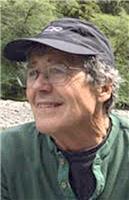 William Robert "Bill" Jevne, 72, died at home in Sequim on Saturday, April 1, 2017, after 22 years living with prostate cancer.
Born June 22, 1944, in Edina, Minnesota, to Franz P. Jevne Jr. and Helen Patricia (Acheson) Jevne, Bill grew up skiing, playing hockey and spending time outdoors, passions that stayed with him throughout his life.
He attended Dartmouth College, where he was a member of the varsity hockey team. Upon graduation from Tuck Business School, he enlisted in the Marines and deployed as a second lieutenant in 1968 to Vietnam, where he was awarded the Bronze Star for valor.
Upon discharge, he worked as a hockey coach in Val d'Isère, France.
He moved to Sequim in the early '70s, earning a teaching degree from the University of Washington. He met his future wife, Juanita Ramsey, at his first teaching job. They married in 1988 and gave birth to William Ramsey Jevne in 1992.
In 1995, Bill and Juanita founded Five Acre School, a private elementary school. Bill designed and built the unique schoolhouse, the first commercial straw bale structure in Washington state. Bill also helped establish the Black Diamond Community Dance, organized the annual Missoula Children's Theater visit to Sequim for 17 years and served as commodore of the Royal Dungeness Yacht Club. He and his autoharp were a fixture at jams and open mics across the Peninsula.
He was an avid outdoorsman and traveler: In the last 18 months of his life alone, in spite of his cancer, he went horse trekking in Mongolia, skied over 90 days in the Rockies, sailed the Strait of Juan de Fuca and drove a U-Haul of supplies from Sequim to the Standing Rock protest camp.
When his cancer paralyzed his lower body, he exercised his right to meet his death with dignity. He spent his final hours singing with family and friends, and passed away quickly and peacefully.
He is survived by his wife, Juanita; son William; brothers Franz and Pete; and family, friends and former students who remember him with love.
All are welcome to Bill's service Saturday, April 22, at Sequim Community Church, 950 North Fifth Avenue, Sequim, WA 98382. Doors open at 3:15 p.m., and the ceremony begins at 4 p.m.
Memorial donations can be made to the Five Acre School Scholarship Fund, 515 Lotzgesell Road, Sequim, WA 98382.
— Published in Peninsula Daily News on April 16, 2017
Obituary for William Robert Jevne ’66
by Warren C. Cook ’67
Bill Jevne died at home with his family at his side on April 1st, 2017 after a 22 year fight with cancer, most likely caused by his exposure to Agent Orange while serving as a Marine Platoon Commander in Vietnam in 1968 and 69. Bill was 72.
Bill was born in Minneapolis in June 1944 and grew up in Edina, MN, a suburb of Minneapolis, in a wonderful family, his mother and dad and two brothers were all gamers, all passionate about literature, music, playing most games and sports and most of all the family knew how to have fun.
He came to Dartmouth in 1962 with a group of 7 hockey players from Minnesota. We all knew him as one sweet guy who brought fun into any room or sport, then and now.. He was in the Dartmouth Tuck 3-2 program, a member of Beta and C&G and played on the hockey team all four years, including the team that won the Ivy Championship in 64. In his last year at Tuck 1967, he played for the Concord Coachmen in the New England Hockey League. On the rink he was known for his relentless play! He enlisted in the Marines OCS Program upon graduation, reporting for duty in the fall of 1967.
Bill deployed to Vietnam in the summer of 1968. On the day he arrived he learned that one of his best friends, teammates and Marine mates, Bill Smoyer ’67, had already been killed in action. This was the beginning of a very hard tour for Bill, seeing a lot of action. He said the whole experience turned his life upside down.
After he got out of the Marines, he spent the next ten years or so traveling, playing and coaching hockey in Val D’sere France, and also struggling with ever increasing PTSD before the condition was understood. He eventually settled in Sequim, WA on the Olympic Peninsula where he lived the rest of his full life.
In the mid-1980s he earned his K-12 teaching credential from the University of Washington. His first teaching job was at Head Start, the federally funded preschool program for low-income families. There he met his dear wife Juanita Ramsey. Bill’s PTSD was deeply affecting him, but he had joined one of the first support groups for Vietnam veterans. They married in 1988, and though the war was always present for Bill, the therapy freed him to live fully again. Their only child, William, was born in 1992. After teaching in the public schools for seven years, Bill was increasingly frustrated by the focus on state-mandated testing. He decided to start his own school. He and Juanita opened Five Acre School—“Where Children Have Room to Grow”— on the property adjacent to their home. Bill designed and built the schoolhouse himself. It was the first officially permitted commercial straw bale construction in the state. They ran the school for over 19 years, turning over the leadership when Bill’s cancer returned in 2012 and became metastatic. Five Acre is still serving students today, following the philosophy and curriculum the Jevne’s established.
Bill, Chief, Jevs, Jevie, as he was known by many of us, was a special friend of mine and I had the good fortune to spend a lot of time with him the past 5 years, most of it skiing in Montana, but in the past 6 months helping him move back from Colorado where they had a small ranch near Telluride, and then again in Sequim. While he was not one to ask for much, especially from an old hockey and Marine mate, he did ask me to keep his many Dartmouth and Marine friends up to date about his deteriorating condition in the past year. So I have been asked by your class news editor to include some of that reporting in this accounting. It tells more about the kind of person he was and how he lived his life, not without its struggles, but in the end a beautiful life centered on the things he loved dearly-his family, his friends and the outdoors.
I have just spent the last three days with Bill at his great home in Sequim, WA where he is very much bed ridden and on his last legs. That said we had a great time together and picked up right where we left off back in Sept and July when I was with him as well. While you have all been in touch with him in various ways and I do not presume to speak for him, he did ask me to send along an update and more important his love and thanks for your friendship that has been such an important part of his life. In fact when we first talked on tuesday after his brother Franz left, he said he was in a good frame of mind, not scared to die, no regrets, despite many mistakes, but that he was not happy about leaving because he would lose the time with his family and friends given that they all had more time now. In fact he said, “That sucks! But while my mind is sharp my body is breaking down, the pain is very hard even with the meds, and I can't even get out of bed.”
All that said I felt a sense of pride and calmness when I was with him, grit as well. He is being beautifully cared for by his dear wife and beloved son who are doing as well as can be expected and at the ready day and night. They do have a local hospice group that has been most helpful but the three of them are very much doing this together. He has the death with dignity medication on hand and plans to use it sooner than later. He, Juanita and William helped his mother use this procedure in 2014. In December, a close friend used it. All three seem comfortable with it.
I wanted to particularly tell you about my day with him on Wednesday. Bill has a lot of Vietnam stuff—letters, pictures, writings, poems, medals and music— that he wanted to organize and send back to the Vietnam Archives at Dartmouth. This is part of the Dartmouth Vietnam Project that he has participated in. Anyway, he had already started organizing it but had not finished so we spent the whole day going though most of it piece by piece, putting each in a designated file. He had two breaks, one when a past student from Five Acre stopped by and then again when he rested for an hour and sent me out to one of his backyard fields to take down a bunch of fencing. Truth be known he wasn't sure I had a clue how to do it, even after I had taken miles of fencing down at his CO ranch last summer. I told him I always appreciated him carrying me but there was nothing he could do about my weaknesses anymore! He said, ok!
This day together with his many writings during and after the War demonstrated the above mentioned grit, sensitivity, the extraordinary impact his Vietnam experience had on him, as he said it turned his life upside down, but it was also amazing how he recovered from it and led such a full and important life. His review of the many details of that experience this close to the end of his life demonstrated with many different emotions all day long how important the people involved were to him, you All included. The other neat part of the day was William and Juanita reading and seeing some of this stuff with Bill for the last time.
Because of Bill’s connection to Bill Smoyer and his own service in Vietnam he got to know Jim Wright and was interviewed by Jim for his new book, Enduring Vietnam. Fortunately Bill got a chance to see the book before he died and I am adding a note that Jim sent to Bill just before he died:
“You were so much help to me in thinking through some parts of this book. Your own service and your stories were rich and moving. In fact I will be out on the road starting next week and was planning to tell your account of being warned at orientation not to ever let your men see you cry.
“That alert says so much about the natural human response to the tragedy of war—and about the need for those who serve to suppress most natural human responses. I sometimes have described it by describing how we raise our children in this culture—and in truly all cultures—to mind two things: Never put yourself at risk (don’t touch a hot stove; be careful crossing the street; don’t climb out there, etc) and secondly, don’t harm other people.
“In fact the latter is not just a protective parental teaching: ignoring it is considered a violation of law and of faith. But then for some small group late in their teens who join the armed forces, especially those who serve in wartime, we take them into training and teach them to forget these lessons: they must be willing to put themselves at risk without any hesitation. A new instinct must supersede any form of risk analysis. And beyond this they must be prepared to inflict harm, lethal harm, on others. And to do this without any sort of deliberation or moral consideration.
“And then, the final act, we discharge them from military service and tell them to forget what they recently learned, what they did and what they experienced. Just go back to the old rules of not taking risks and not harming others. Of course the vast majority do go back to the old rules happily. But few of them are able to “forget” that period of their lives where they needed to act in contrary ways. When they couldn’t let their men see them cry.”
And adding to Jim’s poignant remarks, in the package of materials he sent back to the Dartmouth Archives was a yearbook from a reunion of his platoon that he and his Navy Corpsman put together a few years back including a list of contacts. Bill being Bill, he made it his business on the day before he died to call each of his still living Marines to say good by. Bill knew what Semper Fidelis meant!
And Semper Fi went well beyond his Marines as he made every effort to reach out to most of his friends in one way or another. I know one of the great joys of his life were the reunions he attended , especially the 100th Anniversary of Dartmouth Hockey, a Dartmouth Hockey and Marine Dinner in Boston, a small reunion in DC where he took his family to the Sunset Parade at the Marine Barracks and to the Wall to be with his Marine mates and finally his 50th class reunion last year. He talked about them often and loved seeing the members of his class and his team as well as younger and older classes.
Bill always talked about his “buddies” from Edina, from Dartmouth, from the Marines, from Val D’Isere, from Sequim and from the rest of his full life. But there was no other buddy like Chief.
Warren C Cook’67
warren.cook10@gmail.com